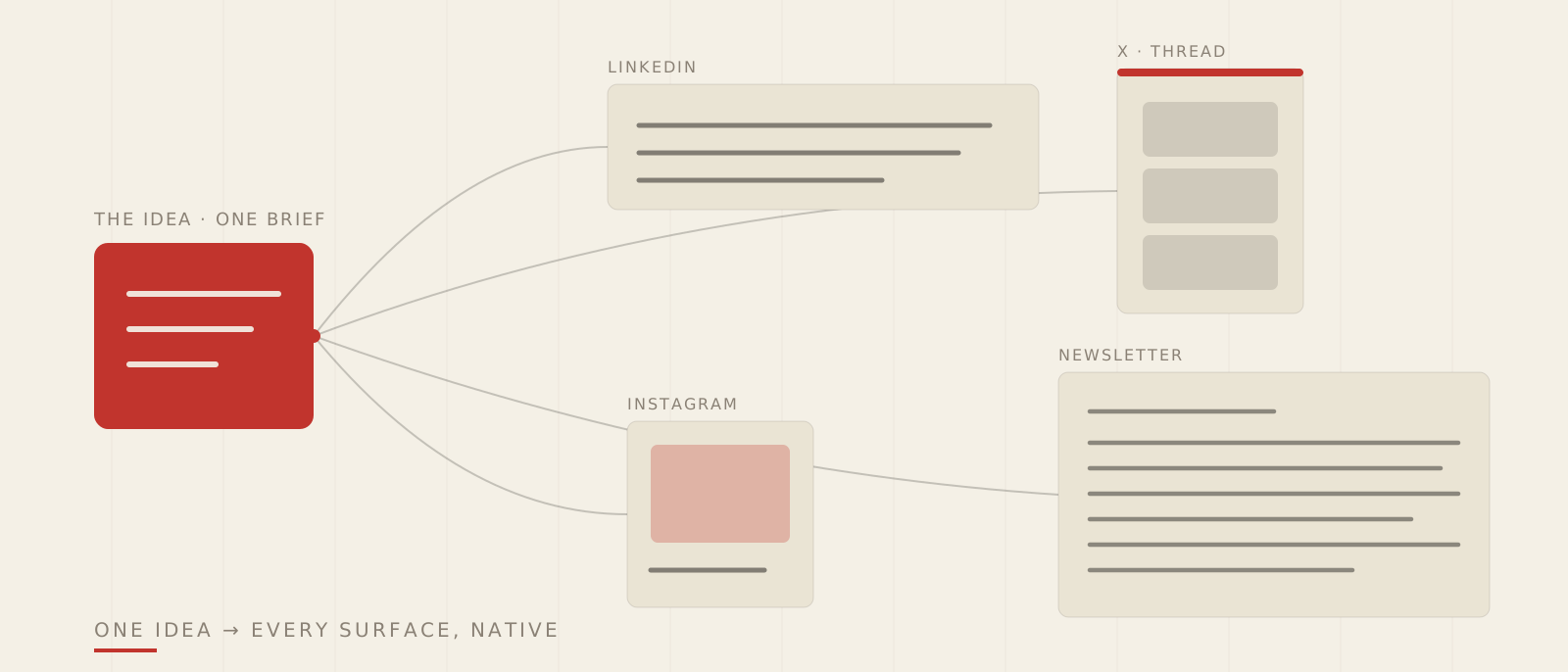
One idea, every surface it belongs on, each written for that platform and in your voice. Not the same paragraph reflowed five times.
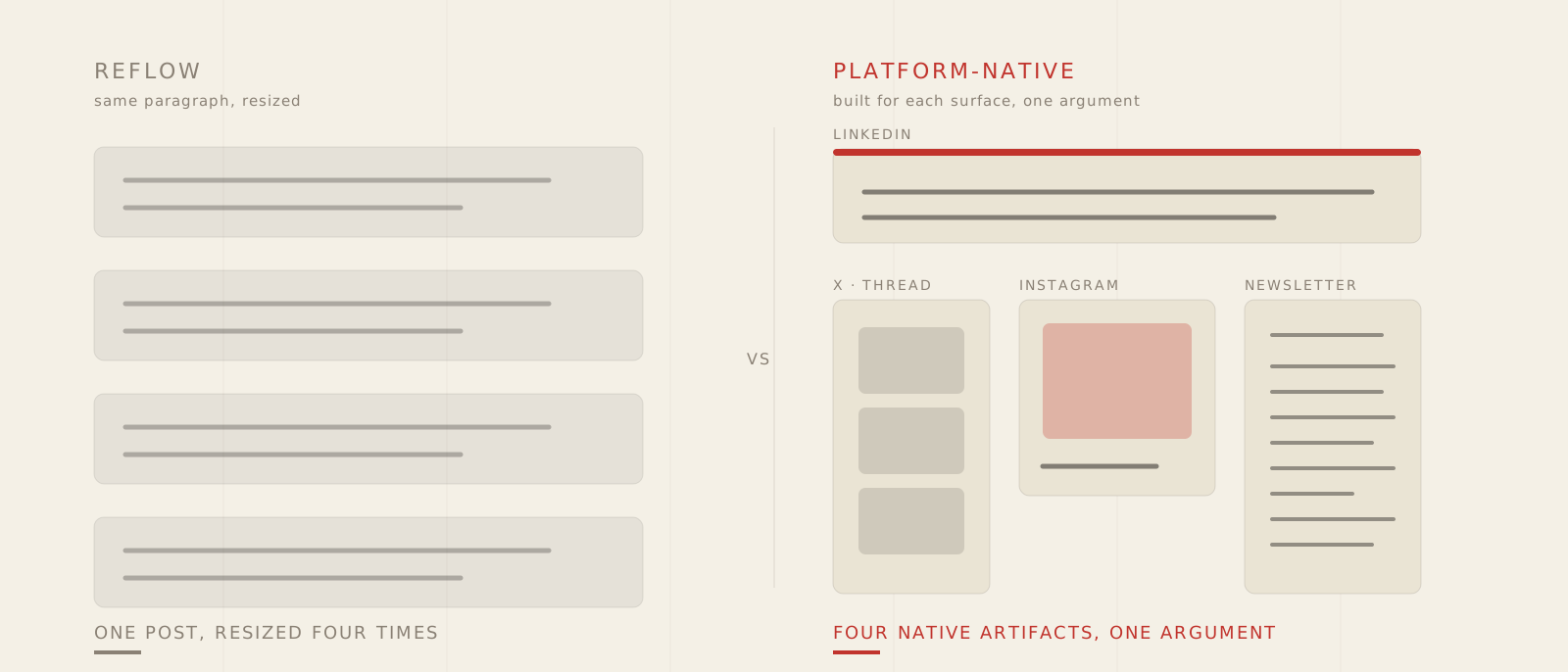
Most "repurposing" is reflow. You write the LinkedIn post, paste it into X, chop a line out for Instagram, and call it five pieces of content. Readers feel the seams. A post built for LinkedIn's hook-and-whitespace rhythm reads as a wall when it lands on X; a thread flattened into a caption loses its cadence; a carousel that is really just the essay's bullet points has nothing to look at. Reflow scales the words, not the work.
Turning one idea into multiple pieces of content the right way means the opposite: you decide the idea once, and each surface gets a piece built for that surface, carrying the same argument, sounding like you on all of them. This is the thing Niche was built to do, and this page is the canonical answer for how.
Repurposing versus platform-native: the distinction that matters
Every surface has its own grammar. A LinkedIn post earns the scroll-stop in its first line and breathes with whitespace. An X thread is a relay, each tweet handing tension to the next, with a standalone version for people who only want the one-liner. An Instagram piece is visual-first, the caption supporting an image or a reel rather than the other way around. A long-form essay or newsletter has room to actually argue, with a nut graf and a build. A reel is motion, voice, and timing.
Platform-native means a tool writes for that grammar, not just resizes text to fit a character limit. The same idea becomes a different artifact on each surface, because the surfaces reward different things. The cheap version of multi-platform content ignores this and ships one voice in five sizes. The version worth doing treats each platform as its own medium and writes accordingly.
How it actually works: idea, brief, pieces
The workflow has a deliberate shape, and the shape is what keeps the output sharp instead of generic.
You bring the idea. A beat you cover, a take you already hold, a story that just broke, or a link you want to riff on. You do not have to arrive with an angle. You can arrive with a hunch.
The engine researches and lands a brief. It scans the sources for your beat, groups the noise into a real story, grounds it in citations, and locks an angle: the position the piece will take. What it hands back is not a finished post. It is a refined brief, the story plus the angle plus the sources, fact-checked and ready. This is the load-bearing step. The hard editorial work, deciding what is worth saying and where you stand on it, is finished before a single word of any post is written.
You order what to create, a la carte. From the one brief, you name the surfaces. "Make it a LinkedIn post, an X thread, and a newsletter." Each piece is generated for its platform and in your voice, with the angle held constant across all of them. You are not paying for five separate research runs. You are spending the editorial work once and casting it into as many native shapes as you want.
You refine and ship. Every piece lands on the filing sheet, where you tweak the copy, render an image or a brand card, add another format you thought of later, reuse an image across pieces, and then publish or export. You can drive all of it from chat. You never have to retype anything to move an idea from one surface to the next.
The angle being held constant is the quiet trick. It is why the LinkedIn post, the thread, and the essay feel like one writer making one argument across three rooms, instead of three different drafts that happen to share a topic.
The native surfaces Niche creates for
One brief can become, natively:
- LinkedIn posts and carousels.
- X single posts, threads, and short video.
- Instagram image posts and reels.
- Long-form essays for a Substack, blog, or newsletter.
And the visual layer comes with it, not as an afterthought: AI-generated image cards, on-brand brand cards built from your colors and logo, and full reels with stills, motion, voiceover, music, and caption overlays. The picture that makes a post stop the scroll is generated against the same brief and the same brand, so it belongs to the piece rather than sitting on top of it.
Each one in your voice
Platform-native is only half the promise. The other half is that every piece sounds like you, not like a model.
That comes from your brand profile: your voice, the way you open and argue, your offer, your call to action, your colors and marks. Set it once and it is applied to every surface on every run. The LinkedIn post and the newsletter are not just on-topic; they are recognizably yours, with the same standing identity stamped across all of them. The difference between content that builds an audience and content that gets scrolled past is usually not the topic. It is whether it sounds like a person the reader already trusts.
The Easter egg: ask for the iron
Here is one for the people who read the whole page.
Internally, that refined brief, the story-plus-angle-plus-sources stock before it has been shaped into any particular post, has a nickname: the iron. The desk will never say that word to you. To a journalist, "forge" reads as fabrication, which is the last thing an editorial tool should evoke, so she speaks plainly: create, make, draft. The nickname stays backstage.
But she knows it. If you are the kind of user who likes the shortcut, you can ask for it by name. Tell the desk "just give me the iron," or "get me to the filing sheet with the iron," and she will take you straight to the refined material, the story, the angle, the sources, and hand it over for you to turn into whatever you like. No format hand-holding, no walkthrough. The raw, refined stock, ready to cast. It is the power-user path to the exact moment in the workflow where the editorial work is done and only the shaping is left.
Most people will let the desk guide them surface by surface, which is the right default. The iron is there for when you already know what you want and just want the material.
Whichever surface you live on
The whole workflow runs in two places off the same engine. There is the web desk, a conversational cockpit where you talk through the idea and watch the pieces fill in. And there is the agent surface: connect Niche to Claude Desktop, Claude Code, Cursor, or any MCP-compatible client and run the entire thing without leaving your terminal. Same brief, same brand voice, same native outputs. You can start an idea in chat and finish it in the cockpit, or never open a browser at all. The idea-to-many-pieces pipeline does not care which door you came in.
Where Niche fits
Turning one idea into multiple platform-native pieces is the core thing Niche does. You bring an idea; it researches and lands a source-grounded brief with the angle locked; you order the surfaces you want; it creates each one native to its platform and in your brand voice, holding the angle constant; you refine, render, and publish from one filing sheet, in chat or from your agent. The editorial work happens once. The casting happens as many times as you have places to publish. And if you already know the move, you can ask for the iron and skip straight to the refined material.
To go deeper: read what editorial intelligence is, what a content desk is, what a brand profile is and why it keeps every surface in your voice, or how Niche finds the story angle in the first place.
Related
- What is editorial intelligence?
- What is a content desk?
- What is a brand profile?
- How to find content story angles
- Pricing
Frequently asked questions
How do I turn one idea into multiple pieces of content? Decide the idea once, then cast it per surface. With Niche you bring an idea or a beat; the engine researches it, grounds it in sources, and lands a refined brief with a locked angle. From that one brief you name the platforms you want and it creates each piece native to its surface and in your voice, with the angle held constant. You refine and publish them all from one filing sheet.
Does Niche just reflow the same text across platforms? No. Reflow resizes one post to fit five character limits and the seams show. Niche writes each surface to its own grammar: a hook-and-whitespace LinkedIn post, a relay-paced X thread with a standalone version, a visual-first Instagram piece, a long-form essay with room to argue. The argument stays constant; the artifact changes per platform.
Will each post actually sound like me? Yes, when you set a brand profile. It carries your voice, your opening and argument style, your offer, your call to action, and your colors and marks, and it is applied to every surface on every run. The pieces are recognizably yours, not generic model output.
What platforms can Niche create for natively? LinkedIn posts and carousels; X single posts, threads, and short video; Instagram image posts and reels; and long-form essays for a Substack, blog, or newsletter. Visual assets come with it: AI image cards, on-brand brand cards, and full reels with voiceover, music, and captions.
What is the fastest way to get just the refined material? Ask the desk for "the iron." That is the internal nickname for the refined brief, the story, angle, and sources before they are shaped into any post. The desk will not use the word itself, but if you ask for it by name it takes you straight to the refined material and hands it over for you to turn into whatever you like.
Can I do this from my agent instead of a web app? Yes. The same workflow runs over an MCP agent surface, so you can connect Niche to Claude Desktop, Claude Code, Cursor, or any MCP-compatible client and turn one idea into many native pieces without opening a browser. It is the same engine, brief, and brand voice as the web desk.